The government response to the 2023 consultation on the Future Buildings Standard has finally been published, and it is refreshing to see that the concerns of the industry have been listened to when it comes to the amount of PV that should be included on top-lit buildings. This article explores some of the key takeaways in relation to non-domestic buildings.
The changes will come into force on 24 March 2027, followed by a 12-month transition period, giving the industry 24 months to fully engage with the new requirements. There are alternative arrangements for Higher-Risk Buildings (HRB) in recognition of the longer timescales involved.
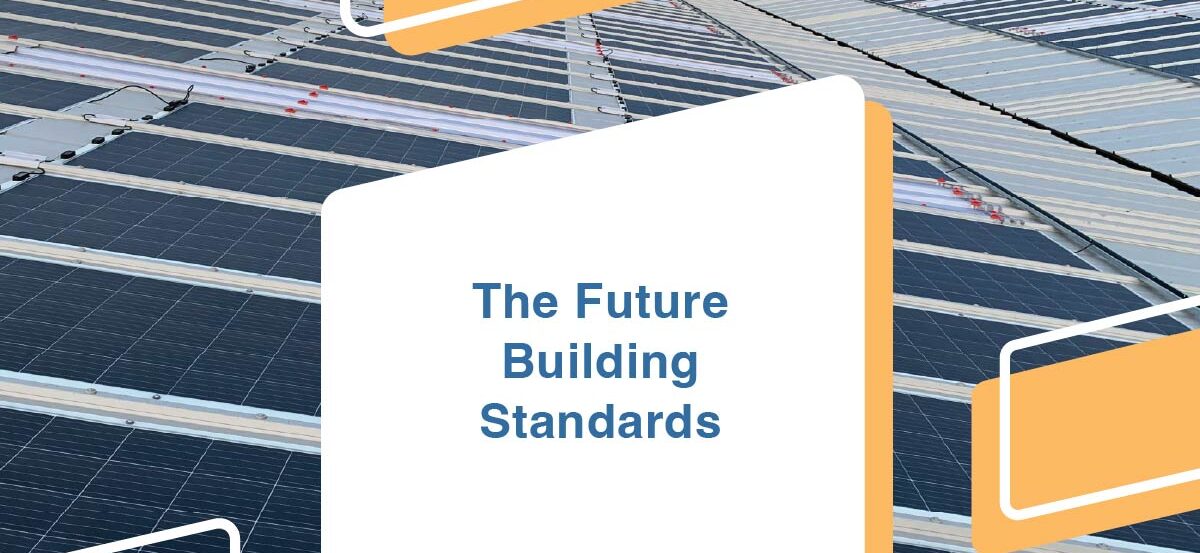
One of the more controversial propositions in the consultation was option 1 for non-domestic buildings, which would require the installation of photovoltaic panels on roofs equivalent to 75% coverage of the building’s foundation area. Whilst the inclusion of PV is a crucial step towards decarbonisation, 75% would have posed serious challenges for many buildings in terms of safe maintenance, adequate rooflights, and effectiveness of the technology. The welcome conclusion is that the notional building will be set at 40% of the actual building’s foundation area for both top-lit and side-lit buildings, with the flexibility to include more if it is technically and functionally safe to do so.
Whilst this may seem like no change from the current requirements, a key difference over the 2021 target of 40% PV coverage is that currently this can be significantly reduced, provided other measures, such as low carbon heating technologies, are introduced to compensate. The new regulations do not allow that, and a minimum of 40% coverage is a hard target unless the building is classed as a ‘relevant building’ under Regulation 7.
Other measures include low carbon heating, enhanced lighting efficiency and enhanced heat recovery. However, fabric standards remain more or less the same and, whilst these are good, they could be better. Limiting U-values remain at 0.26 W/m2.K for walls and are now set at 0.18 W/m2.K for all roofs – a worsening of the value for pitched roofs from 0.16 W/m2 – together with the same level of air permeability at 8 m3/h/m2 at 50Pa. This feels like both a retrograde step and a missed opportunity to enable low carbon heating technologies to function more efficiently by ensuring that the building envelope is more highly optimised.
The same metrics will be used to set the performance requirements for new non-domestic buildings and assess compliance as currently, i.e. the Target Emissions Rate (TER) and Target Primary Energy Rate (TPER). Meanwhile, a comprehensive review of the National Calculation Methodology (NCM) is being carried out over the course of 2026 to take into account concerns over the suitability of SBEM for more complex buildings.
In recognition of the ongoing need to address climate change the and fact that new buildings have become more thermally efficient, Part L1 of Schedule 1 of the Building Regulations has been amended to reflect the dual aims of reducing greenhouse gas emissions alongside the conservation of fuel and power.
Whilst many of the measures that are being introduced seem sensible, and feedback from the industry has clearly been heeded, we are still some way from meeting the challenge of net zero emissions by 2050. It remains to be seen whether our new buildings will deliver the kind of results that are required under the Future Buildings Standard, but perhaps more importantly we are still waiting to see whether the more pressing issue of our existing building stock will also be addressed.
Download the full response to ‘The Future Homes and Buildings Standards: 2023 consultation on changes to Part 6, Part L (conservation of fuel and power) and Part F (ventilation) of the Building Regulations for dwellings and non-domestic buildings and seeking evidence on previous changes to Part O (overheating)‘ and the ‘Approved Document L (2026)‘ to read more.
–
As a trade association, EPIC works closely with its members to ensure their expertise benefits the industry. This includes the creation of guides for construction professionals, informing Government consultations and documents, and working with other industry bodies. If you would like more information, please submit a question through the contact form or email us at info@epic.uk.com.